2017-06: The Best & Worst of Times [Jon's Snow's Edinburgh Lecture]

Channel 4’s award-winning anchor-man, Jon Snow, gave the James MacTaggart Memorial Lecture
at Edinburgh last week. It’s a beautifully-written,
hard-hitting and very moving presentation in which he aims his criticism at the media and also the internet barons, Google and Facebook.
“The explosion of digital media,” Snow argues, “has filled neither the void left by the decimation of the local newspaper industry, nor connected us any more effectively with ‘the left behind’, the disadvantaged, the excluded. Never have we been more accessible to the public nor in some ways more disconnected from the lives of others. Over this past year, we … media pundits, pollsters and so-called experts, have got it wrong. Yet I believe that we have, by the nature of our business, an obligation to be aware of, connect with, and understand the lives, concerns, and needs of those who are not.”
He maintains that “our connectivity – life on Google, Facebook, Twitter, and more – has so far failed to combat modern society’s widening disconnection,” and he made Grenfell Tower a ‘wounding centerpiece’ of his talk. His two main themes were: first, that “in the age where everyone is a publisher, public service broadcast journalism has never been more vital,” and second, “humanity needs to match the dramatic growth of social media with a rebirth of social mobility.” He also attacked the internet barons. Indeed, his acid comments about Google and Facebook received widespread media coverage (and a lightening response from Mark Zuckerberg).
“We are in an age when everyone from Trump downwards is a publisher; where in every given year more photos, more information, is published than in any decade of the 20th century. Never since the rise of the printing press have two companies held such a monopoly over the world’s information. Never have such organisations taken so little responsibility for it either.”
Mark Zuckerberg “says he cares about news, but does he really? Or does he care about keeping people on Facebook? Many news organisations including our own, have asked too few questions about the apparent miracle of Facebook’s reach. For us at Channel 4 News, it (Facebook) has been invaluable in helping us to deliver our remit – to reach young viewers, to innovate, and to get attention for some of the world’s most important stories. But the other side of the issue – the dark, cancerous side – Facebook enabled the story: “Pope endorses Trump for President”. That engaged more than a million people during the US Elections. That same algorithm that prioritised many amazing reports of ours, also prioritised fakery on a massive scale.”
“Facebook has a moral duty to prioritise veracity over virality. It is fundamental to our democracy. Facebook’s lack of activity in this regard could prove a vast threat to democracy. Facebook’s principles are seldom explained in detail and can change overnight at Mr Zuckerberg’s whim.”
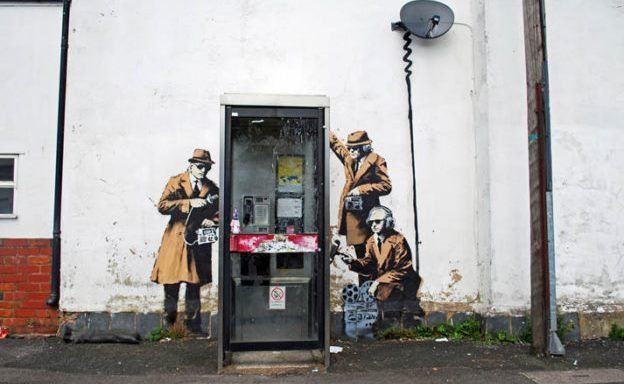
Snow also warns about the potential threat to journalists in the UK from new legislation: “The Law Commission is consulting on a new espionage bill. It follows on from the Snooper’s Charter which enables the police to access private communications data without judicial oversight. It’s now proposed effectively to criminalise journalists, and their sources, treating us like spies. It suggests anyone publishing or broadcasting leaked government information could land in jail for up to 14 years. Economic and financial data fall within this ‘national security’ legislation, thus impacting upon our ability to report – for example – leaked Brexit deals. No wonder in recent years that the World Press Freedom Index finds UK journalists are now less free to hold power to account than those working in South Africa, Chile, or Ghana.”
And here’s more bad news: “Earlier this year a YouGov survey for Channel 4 revealed only 4% of people can actually distinguish between fake news from truth. This is what we’re up against… While the reach of Facebook video exceeds that of conventional broadcasting, the revenue provided doesn’t even come close. And Facebook themselves have provided publishers with the most nominal of sums and certainly not the rate for the job. Rather than simply trying to take down the fakery, there has to be an incentive for Facebook to pay the rate for high quality news and encourage the development of a global bedrock of truths rooted in their offer to the quarter of the world’s online audience that consume them, and use them.”
“I’m a fan of Facebook — it’s great, it’s terrific — but I’m not a fan of playing fast and loose with the products that we in this room generate at great expense. But this is the challenge for us all here. Yes, we embrace and revel in the digital age. But no, we cannot let the massive power of its barons devour our local and national sources of information. That’s why it will take the effort of every single one of us – the producers, the journalists, the platforms, the politicians and the public – to reconnect our disconnected world.”